
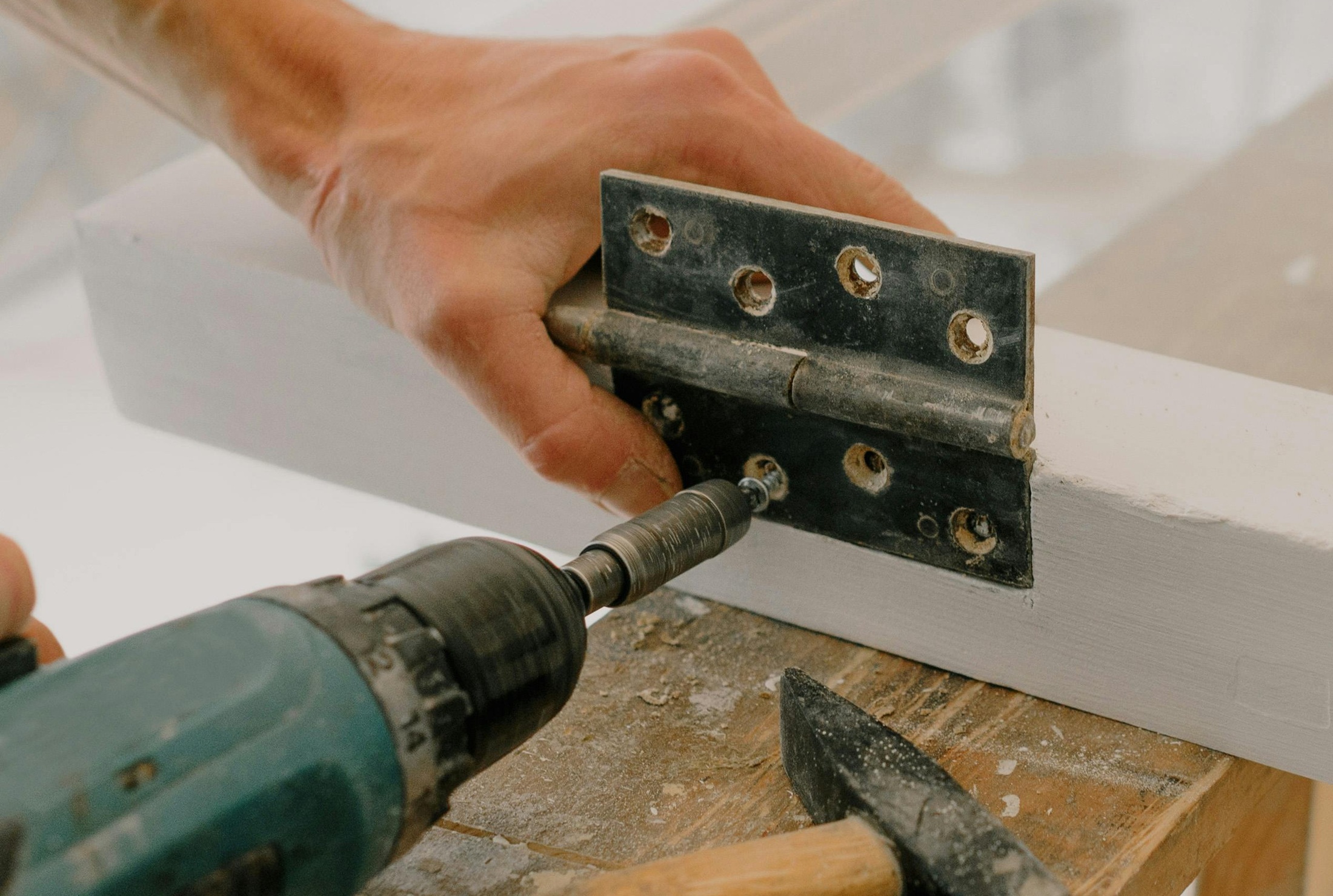
A torn-out hinge on an interior door can be repaired using the classic carpenter’s matchstick method (for minor damage) or by professionally drilling out the damaged hole and gluing in a wooden dowel (for more extensive damage). For MDF door frames or door panels, a two-part wood filler and epoxy resin can provide an effective repair. If the damage is too severe, a practical alternative is to reposition the hinge with precision.
A torn-out hinge on a room door sounds like a hopeless situation. Fortunately, this is one of those problems that seem like a disaster but in reality, it only requires a little patience and the right technique. Instead of replacing the entire door frame or door leaf, we can use proven carpentry methods. Below, our door joinery specialists have created a comprehensive guide that will walk you through the process of diagnosing the problem and repairing torn-out hinges. Use simple home remedies or professional tricks and enjoy doors that are as good as new!
Contents:
- A torn-out hinge – look for the cause
- How to repair a torn-out hinge? A method for minor damage
- Professional repair of major damage
- Alternative solutions
- How to make a door frame?
A torn-out hinge – look for the cause
Are you wondering how to repair a torn-out hinge on a room door? Before you reach for your tools, be sure to find out why the hinge broke. The most common reasons include normal, long-term use of the door leaf, which has weakened the structure of the wood or MDF board. Another frequent reason is overload caused by pulling the door leaf too hard or one of the household members hanging on it. A torn-out hinge can be also a result of installation errors, such as using screws that are too short, which only superficially got into the layer of material. Finally, there is a quiet and less obvious culprit: moisture. This problem mainly affects bathroom doors or those leading to laundry rooms or basement rooms, which are exposed to moisture due to inadequate insulation. Under its influence, the wood may have swollen and lost its density, causing the screws to no longer hold properly.
Once you know the cause, assess the extent of the damage and prepare the right tools. In order to repair a torn-out hinge effectively and without any problems, prepare a screwdriver or Phillips screwdriver, strong and waterproof wood glue, wooden dowels, toothpicks or matches, as well as a chisel, hammer and sandpaper with a grit between 120 and 180. If you have doors made of MDF or chipboard, a two-component filler or epoxy resin may be useful.
How to repair a torn-out hinge? A method for minor damage
First, the “matchstick” method, which is reserved for minor damage. If the hole is only slightly worn and the screw “spins in place”, you can use the most popular carpentry method using matchsticks. How to carry out the repair?
| Step | Action |
| Cleaning the hole | First, thoroughly clean the hole by removing loose chips from the recess left by the torn-out hinge. |
| Filling | Take a few matches with the heads cut off or toothpicks and dip them in wood glue. |
| Inserting | Insert the sticks very tightly into the hole so that they fill the entire space. Wait a few hours or overnight for the glue to dry completely. |
| Levelling | Cut off the excess wood with a knife to make the surface flat. |
| Assembly | Screw the hinge back in. The new wood from the matchsticks will create a tight socket for the new screw. |
Professional repair of major damage
Sometimes the hole left after the hinges have been torn out is so large that matches are not enough. In such cases, the most professional method comes to the rescue, restoring the full load-bearing capacity of the hinges. We are talking here about drilling and dowelling.
First, prepare the hole. To do this, use a drill with an 8 mm or 10 mm wood drill bit to drill out the splintered and damaged hole. This will remove rotten fibres and let us create a regular shape. Then glue in a wooden dowel with the same diameter as the drill bit. Coat it generously with wood glue and then tap it using hammer into the previously prepared hole. When the glue dries, cut off the protruding part of the dowel with a chisel or a small hand saw. Sand the area with sandpaper so that the hinge adheres perfectly to the surface.
Finally, drill a pilot hole with a thin 2 mm drill bit. The hole must be exactly in the centre of the circle. Remember not to screw the screw directly into the new dowel, as it may break. Finally, screw in the hinge.
But what if our doors are made of chipboard or MDF? Many mass-produced doors are often made of wood-based materials, which crumble when the hinge is torn out. Here, traditional dowels may not be sufficient. In this case, it is worth using a two-component wood filler with a hardener. It offers much better adhesion than regular filler. We can chemically reinforce the whole thing by injecting epoxy resin mixed with sawdust into the hole. Once cured, the material becomes harder than the original board.
Alternative solutions
But what if the damage to the door frame is so extensive that patching it seems too risky? This situation usually occurs as a result of a crack along the grain. In this case, the only option is to move the hinge a few centimetres up or down from its original position. However, this requires making a new cut in the door frame and door leaf with a chisel. The old hinge hole should be filled with filler and painted over with paint matching the colour of the door. Although this method seems simple, it may not give a very satisfactory result.
Repairing a door is one thing, but it is definitely better to prevent such situations. What can be done to avoid hinges being torn out? Firstly, if the door frame construction allows it, it is worth replacing the standard screws with longer ones that reach all the way to the wall. It is good practice to lubricate the hinges annually to prevent them from squeaking, which generates resistance and friction that negatively affects the screws. Hinges are often torn out as a result of opening the door too quickly and forcefully. Installing a door stop that holds the door at the right moment will help here.
How to make a door frame?
For many people, torn-out hinges sound like the worst-case scenario. In such a moment of stress and helplessness, they look for answers to the question of how to make a door frame. Making a door frame yourself is a daunting task that requires experience, specialised tools, as well as time and money, and the result may still not be satisfactory. If torn-out hinges have damaged the door frame, it is worth considering buying a new one that fits perfectly with your door leaf. This will ensure that the door with the new frame is fully compatible. They will match in design and colour, perfectly complementing your interior design.
Repairing a torn-out hinge is a task that, when using the dowelling and gluing method, gives an almost 100% guarantee of success. Installing new hinges and repairing the hole left by the torn-out elements requires time and patience. Rushing to screw in screws into wet glue is the most common mistake that ruins all the work. Therefore, let the joint dry, and the doors will hold really well.