
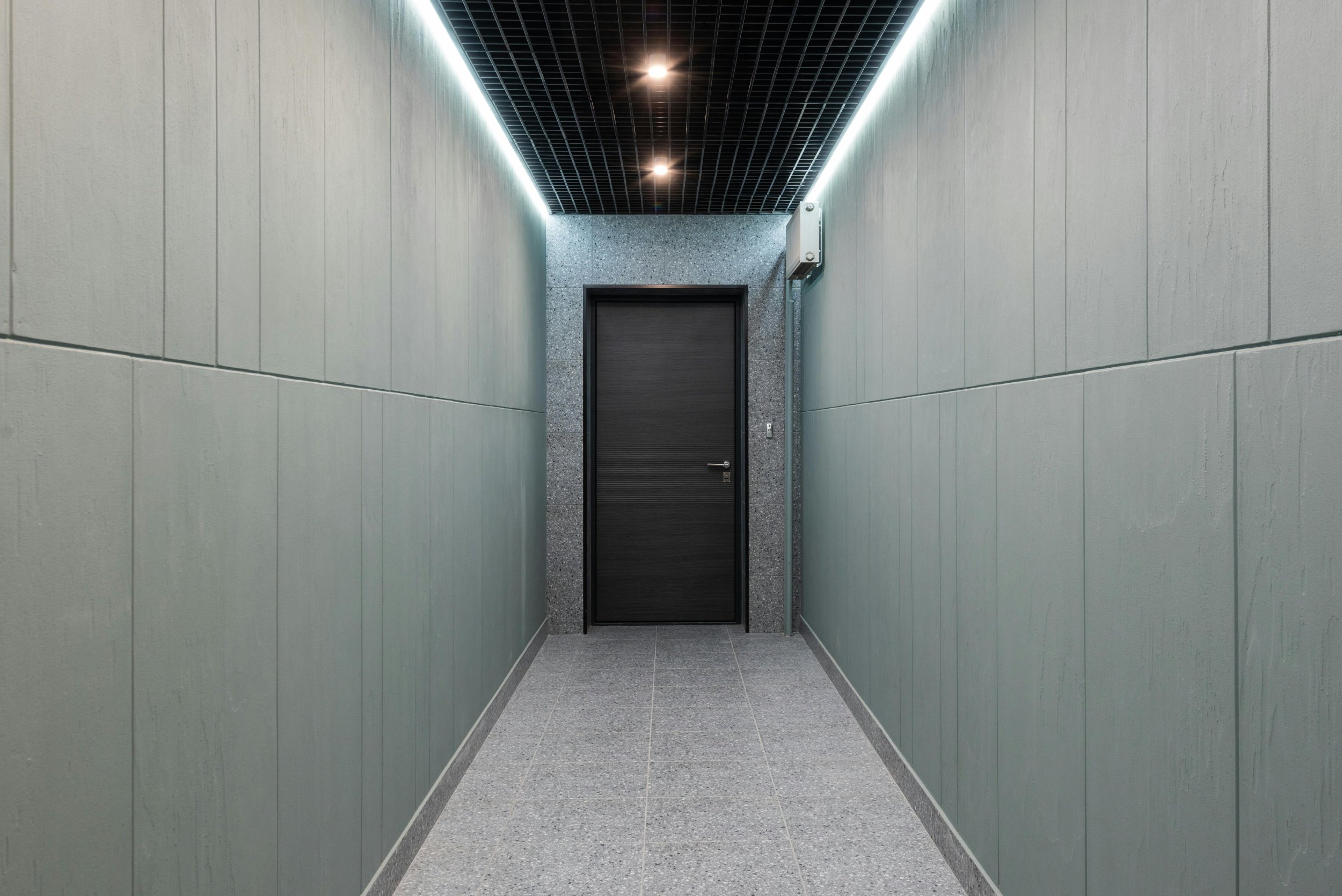
There is increasing talk about the energy efficiency of buildings, heat loss and the resulting rising costs. Poorly sealed entrance doors are one of the elements that have the greatest impact on heat loss in rooms. Metal doors, which easily conduct heat, are equally problematic – causing energy loss in winter and letting hot air in during summer. Therefore, insulating metal doors turns out to be crucial for reducing heating costs and improving living comfort. Are you wondering how to insulate metal doors? Be sure to read on!
Contents:
- Is it worth insulating metal doors? Discover the advantages
- Proven methods for insulating doors
- An overview of the most popular door insulation products
- How to insulate metal doors? Step-by-step instructions
Is it worth insulating metal doors? Discover the advantages
Many people wonder how to insulate external metal doors, but it is also worth asking yourself whether it is actually worth doing. Nowadays, increasing the energy efficiency of a building is becoming a priority both in new buildings and in old ones undergoing thermal modernisation. Heat loss resulting from poorly sealed or untight doors is enormous. This is reflected not only in high heating bills, but also in reduced comfort of everyday use. Both in winter and summer, metal doors absorb the outside temperature, cooling down or heating up, which leads to uncomfortable conditions in the room.
Insulating metal doors is therefore an ideal solution that will reduce heating costs and have a real impact on improving these conditions. There are many proven methods available on the market for insulating door leaves yourself, and the choice of a specific one will depend primarily on the design of your model. Are you looking for ways to insulate your metal front door? Here they are.
Proven methods for insulating doors
The most popular metal door models consist of a simple frame with two sheets of metal attached to it. In this case, it is difficult to achieve a high thermal insulation coefficient. The choice of the best method will depend not only on the door leaf model, but also on our budget and the results we want to achieve. To ensure the best results, it is worth combining several options.
Excellent results can be achieved by filling the door leaf with XPS polystyrene, polyurethane foam or mineral wool. From the inside and outside, it is worth covering the door surface with wood-based planks or upholstered panels and additionally sealing the door frames with neoprene seals and a drop-down threshold. This will effectively stop draughts and heat loss, increasing the thermal insulation properties. A quick but less durable solution is to use thermal insulation foil or mats.
Finally, we should remember that insulating and sealing the door alone is not enough. Cold can also penetrate through metal door frames, especially those that are incorrectly installed. It is worth checking their tightness and, if necessary, filling them with a thick layer of thermal insulation material – polyurethane foam is perfect for this purpose.
An overview of the most popular door insulation products
There are several proven and effective ways to insulate metal doors available on the market. The most effective insulation materials are included in the table below.
| Insulation material | Application |
| Extruded polystyrene (XPS) | Extremely hard and moisture resistant. Easy to install. It is the perfect compromise between performance and price. Available in the form of boards. |
| Polyurethane foam (PUR/PIR) | This solution offers the best insulation-to-thickness ratio. Ideal for spray application. It effectively fills gaps in door frames and fills the space between the metal sheets in the door leaf. It is advisable to have the foam sprayed by a specialist, as there is a considerable risk that foam injected at too high a pressure may warp the metal sheet surface. |
| Aerogel | It has the highest insulation properties of all materials available on the market. Due to its high price, it is mainly used in modern solutions. |
| Mineral wool | Ideal for insulating external doors but requires a perfect fit. Non-flammable, it allows vapour to pass through, not allowing its condensation. |
| Wood-effect boards | They improve not only thermal insulation, but also acoustic insulation. Installed on the inside, they serve as an aesthetic finish. |
| Thermal insulation upholstery | This is one of the simplest and quickest ways to insulate metal doors. Relatively inexpensive with good visual effects. Upholstery installation is often combined with wool or foam. |
| Seals | Modern neoprene seals installed around the perimeter of the door are the final element of door insulation. Combined with other methods, they create an effective way to improve thermal conditions. |
| Drop-down threshold | Insulating doors using a drop-down threshold involves installing a strip with an automatically extending seal that tightly seals the space under the door once it is closed. It perfectly insulates against cold, dust and even unwanted noise. |
How to insulate metal doors? Step-by-step instructions
Before insulating metal doors, it is worth carefully identifying the source of the problem and choosing the most suitable method. You should take into account your budget, the visual effect you want to achieve, and whether the door insulation method you choose will not negatively affect the interior design style of the room. When you decide on covering for the door, there is a considerable risk that the door leaf will not look very aesthetic.
When insulating panel doors, start by removing the external cladding and fittings so that you can thoroughly clean the space between them. Then, fill the interior of the door between the two sheets of metal with the selected thermal insulation material, such as foam, polystyrene or wool. Cover the inner surface of the metal sheet with upholstery mats or wood-effect boards, screwing them to the frame, and then install it. Finally, replace the old seals and install a drop-down threshold.
The methods presented above are highly effective, and if you decide to combine two of them, the thermal insulation coefficient will be really high. But what if none of the above solutions is sufficient for us? In that case, it is worth considering replacing the door with a new one made of composite materials such as fibreglass with a vacuum panel, special wooden doors or steel doors with polyurethane foam filling.
There are many methods available on the market that really effectively improve the thermal and acoustic insulation of metal doors. Insulation with foam, installation of boards and replacement of seals, as well as the use of thermal insulation panels improve the comfort of living and have a real impact on reducing heating bills. The key factors in choosing a thermal insulation method are our individual needs and preferences, as well as our requirements and budget.