
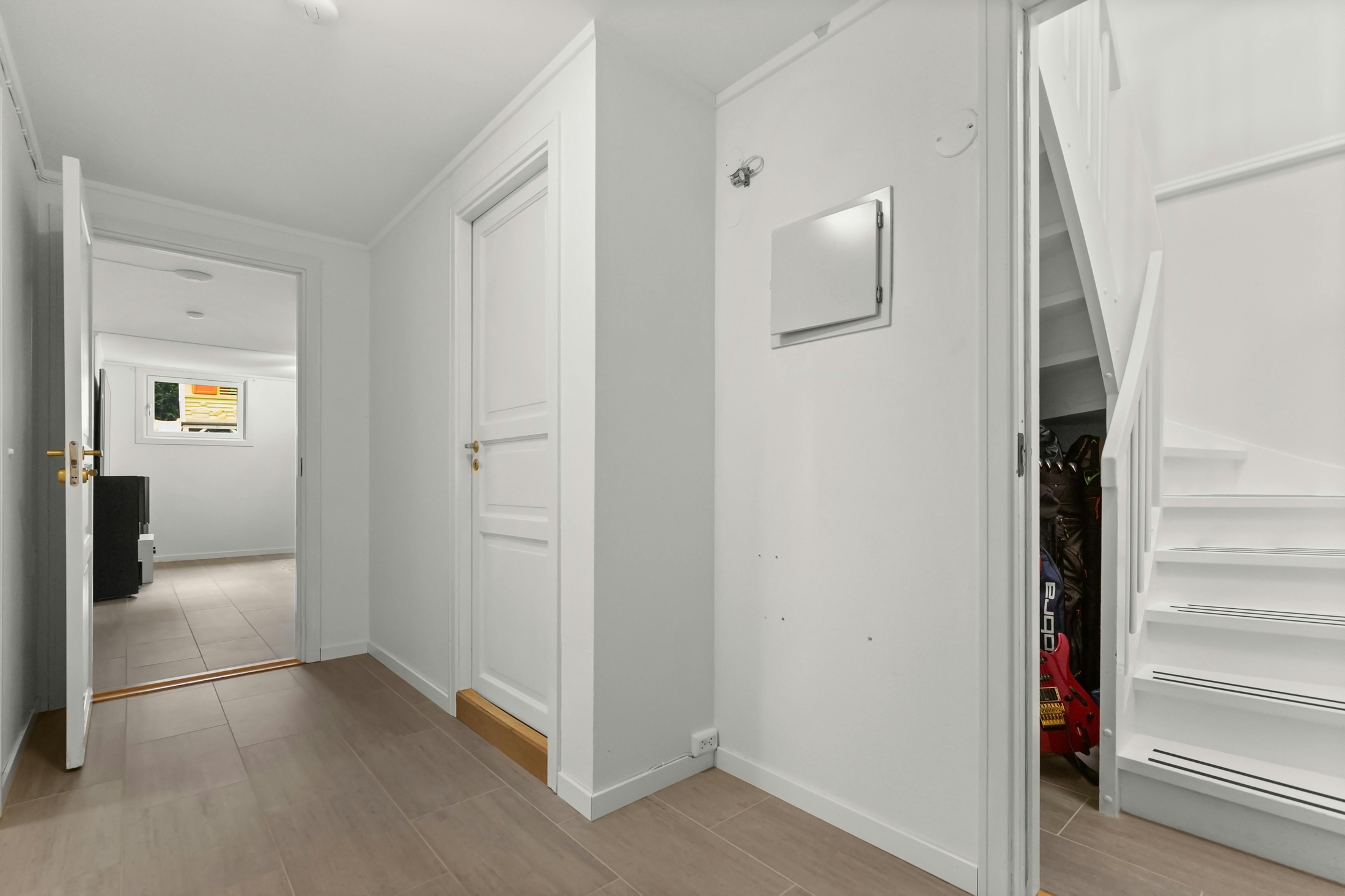
There is more and more talk about the energy efficiency of houses and flats. This issue also applies to interior doors, and in the case of older and not really tight ones, it contributes to heat loss and increased heating bills. Fortunately, there are several ways to quickly and inexpensively improve the thermal insulation of doors. Our specialists have prepared an overview of the most popular methods and step-by-step guide on how to insulate interior doors yourself. We hope you enjoy the read!
Contents:
- Is it worth insulating doors? Discover the benefits
- How to insulate interior doors?
- An overview of the most popular materials for insulating door leaves
Is it worth insulating doors? Discover the benefits
Insulating internal entrance doors and doors between heated and unheated rooms offers a wide range of benefits. It allows to ensure adequate thermal comfort and energy efficiency in your house or flat. Alongside untight windows, untight doors are the main culprit for heat loss. In winter, warm air escapes from inside to outside, generating high heating bills. In summer, the situation is reversed – warm air from outside enters the flat, increasing the temperature.
Insulating the door leaf allows us to maintain a stable, constant temperature, reducing heat loss. As a result, the need for heating or air conditioning decreases, which translates to significantly lower electricity or heating bills. Untight door leaves are the source of draughts and so-called cold zones. All rooms located in their vicinity become places where it is quite uncomfortable to stay.
Good door insulation, which ensures a constant temperature, will have a positive effect on the comfort of your home. In addition to the obvious thermal benefits, door insulation also improves sound insulation. Insulated doors reduce noise coming from the surroundings – the stairwell or neighbouring rooms.
How to insulate interior doors?
If you are wondering how to insulate attic doors or wooden doors, our specialists have prepared a short guide that will help you insulate your interior doors yourself, step by step. Before you start, please note that some of the solutions presented may affect the aesthetics and visual appearance of the door surface.
| Actions | Instructions |
| 1. Assess the condition of the door | Assessing the condition of the door is crucial before insulating the door leaf. Carefully inspect the entire surface of the door and door frame for gaps and damage. If you have wooden doors, pay attention to warping and cracks. For metal doors, check the gaskets and surface deformations. |
| 2. Select the insulation material | The choice of insulation material will depend on the type of door. For the most popular models made of plastic, rubber gaskets and insulating foam strips are the best choice. For wooden doors, use spray foam and self-adhesive rubber or silicone. Insulate metal doors with thermal insulation materials such as neoprene foam. If possible, consider using insulation inside the door leaf. |
| 3. Prepare the surface of the door leaf | Before starting work, make sure that both the door and the frame are clean and free from grease. The entire surface should be thoroughly dried after washing. |
| 4. Install the gaskets | Glue the gaskets (selected and matched to the door model) along the edges of the door frame. The whole thing must be pressed properly to avoid gaps creation. |
| 5. Apply insulating foam | If the gaps in the door are really large, apply insulating foam. However, be careful and apply it moderately so that it does not enter the door frame and push it out. |
| 6. Install the skirtings | If there is a very large gap at the bottom of the door, opt for a falling threshold or skirting board. |
| 7. Check the tightness | After installation, check that the door is properly sealed and can be closed easily. Make adjustments if necessary. |
An overview of the most popular materials for insulating door leaves
Are you wondering how to insulate the door to the attic or other rooms in your house or flat? There are many effective methods available on the market that you can use yourself with little time and money. The choice depends strictly on the type of door and your individual needs.
Insulation foam is one of the most popular methods. This is due to its ease of use and exceptional effectiveness. Polystyrene and polyurethane foams are available on the market in the form of panels or easy-to-use sprays. The panels can be cut to the required size, while lightweight foam effectively blocks air flow, reducing heat loss.
Another extremely popular and inexpensive way to improve thermal insulation is the use of gaskets. Made of materials such as silicone, rubber or foam, they fill the gaps between the door frame and the door. Properly selected gaskets prevent draughts and warm air escaping from the flat. If it is necessary to secure the space between the bottom edge of the door and the floor, it is worth using brush or rubber seals, as well as self-adhesive foam.
If you want a solid and high-quality solution, consider installing a falling threshold. The choice of a specific solution will depend on the size of the gap, aesthetics, as well as the expected effects and durability. In special cases, thermal curtains can be used, which, although not a traditional insulating material, can effectively contribute to reducing heat loss when combined with other methods. However, it is worth bearing in mind that this is a temporary solution in the case when applying other methods is not possible.
Each of the above options has its advantages and disadvantages, moreover, they may be used separately or combined. It is worth adapting the method to the specifications of the door, its location, visual effect and our personal preferences.
Tight interior doors not only affect energy efficiency and soundproofing but are also extremely important for our comfort in everyday life. If you want to insulate your interior doors, it is worth trying one of the methods described above first. If none of them produce satisfactory results, it is worth replacing the door leaf with a new one. Although this solution is costly, it proves to be a long-term investment that pays for itself after just a few heating seasons. Small losses in heat transfer to the outside allow for significant savings and improved living conditions for all household members.